A kitchen backsplash gets dirty every time you cook. Oil splatters from the stove. Tomato sauce hits the wall behind the counter. Steam condenses near the range. Coffee splashes near the machine. This happens daily, and whatever material covers your walls needs to handle it without turning cleaning into a chore.
Most people choose their backsplash based on how it looks. The smarter question is how it cleans — because you'll clean it a hundred times for every once you admire it.
What Makes a Backsplash Easy to Clean
Three material properties determine cleaning difficulty:
Surface Porosity
Porous materials absorb liquids. When cooking oil or colored sauces contact a porous surface, they penetrate into the material rather than sitting on top. Once absorbed, stains are permanent or require aggressive chemical treatment to remove. Non-porous surfaces let spills sit on top, where a simple wipe removes them completely.
Surface Texture
Smooth surfaces release residue easily. Textured surfaces — raised patterns, rough finishes, handmade tile with variation — trap grease and grime in their crevices. What looks charming during installation becomes a cleaning frustration within months.
Joints and Seams
Every joint in a backsplash is a place where grime accumulates. Grout lines between tiles are the most obvious example, but seams between sheet materials, edges where panels meet countertops, and gaps around outlets all collect residue that requires targeted cleaning.
The ideal backsplash minimizes all three: non-porous, smooth, and seamless.
Material Cleaning Comparison
Ceramic and Porcelain Tile
Cleaning difficulty: Moderate to High
The tile surface itself is relatively easy to clean — a damp cloth handles most splatter on glazed tile. But grout lines are the problem. Grout is porous, textured, and recessed below the tile surface. It absorbs grease, stains from colored foods, and moisture.
Cleaning grout requires:
- A stiff brush or old toothbrush
- Specialized grout cleaner or baking soda paste
- Scrubbing individual lines one by one
- Rinsing and drying to prevent water spots
For a kitchen with 30 square feet of subway tile backsplash, there are approximately 200 linear feet of grout lines. Keeping them clean is a meaningful ongoing commitment.
Stainless Steel
Cleaning difficulty: Moderate
Stainless steel is non-porous and smooth — in theory, it should be the easiest material to clean. In practice, it shows everything. Fingerprints, water spots, grease smears, and streaks are all immediately visible on a stainless surface.
Cleaning stainless steel requires:
- Wiping in the direction of the grain
- Using stainless-specific cleaner to avoid streaks
- Buffing dry after every cleaning
- Frequent touch-ups to maintain appearance
The material is hygienic and easy to sanitize, which is why commercial kitchens use it. But commercial kitchens have cleaning crews. Your kitchen has you.
Back-Painted Glass
Cleaning difficulty: Low to Moderate
Glass is non-porous and smooth, making it genuinely easy to clean. A glass cleaner and a cloth handle virtually any mess. The challenge is that the glossy surface shows water spots, fingerprints, and streaks — similar to stainless steel but slightly less pronounced.
Glass behind a stove accumulates a fine grease film that requires regular degreasing to prevent buildup. The film isn't immediately visible but dulls the surface over time.
Natural Stone
Cleaning difficulty: High
Marble, granite, and other natural stones are porous, even when sealed. They absorb oils and colored liquids, developing stains that are difficult or impossible to remove. Acidic substances (lemon juice, vinegar, tomato sauce) can etch polished stone surfaces permanently.
Cleaning natural stone requires:
- pH-neutral, stone-safe cleaners only
- Immediate blotting of any spill (not wiping — wiping spreads it)
- Annual resealing to maintain the protective barrier
- Professional cleaning for established stains
Natural stone is beautiful but demands the most careful maintenance of any backsplash material.
Aluminum Panels
Cleaning difficulty: Very Low
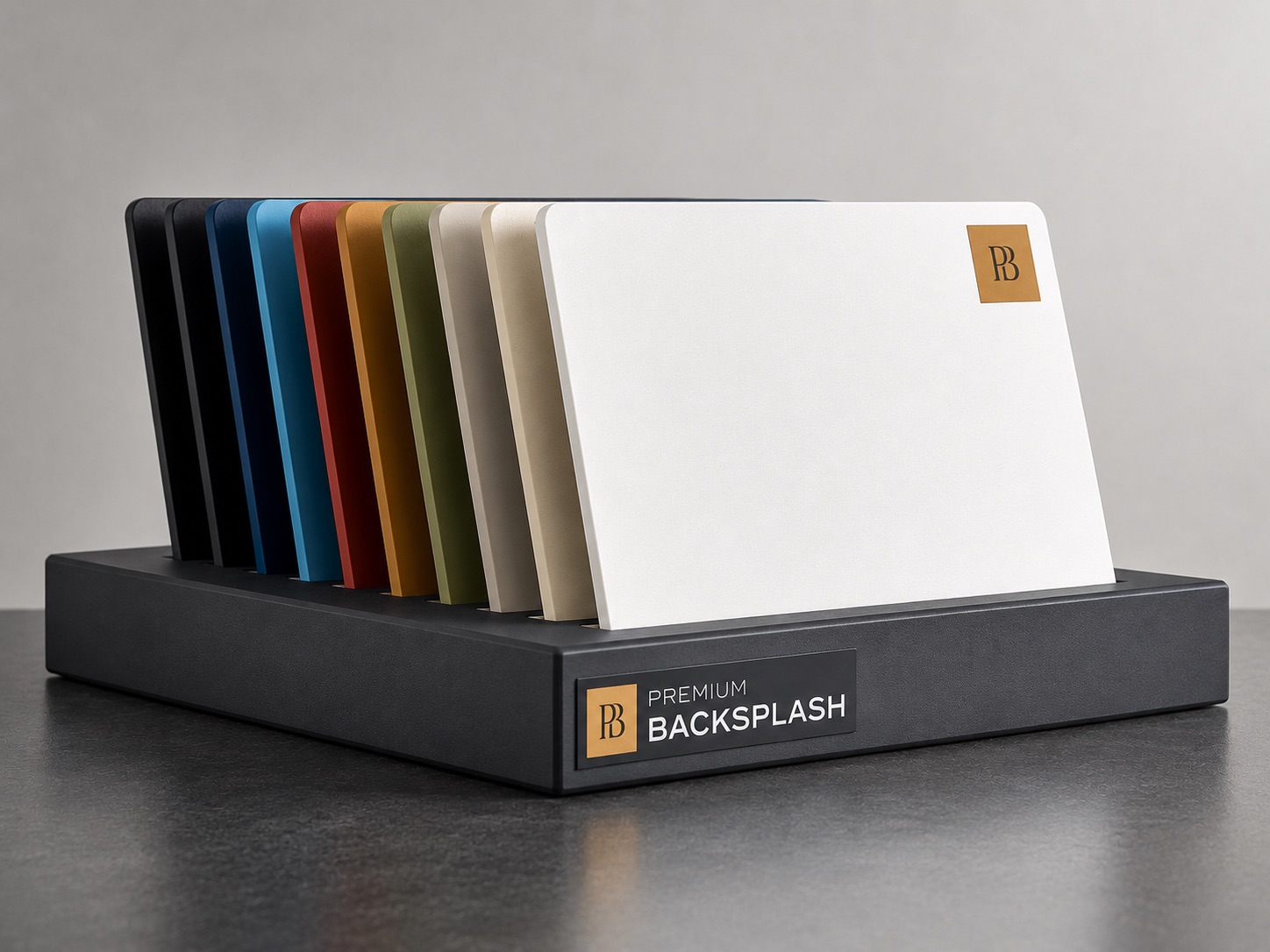
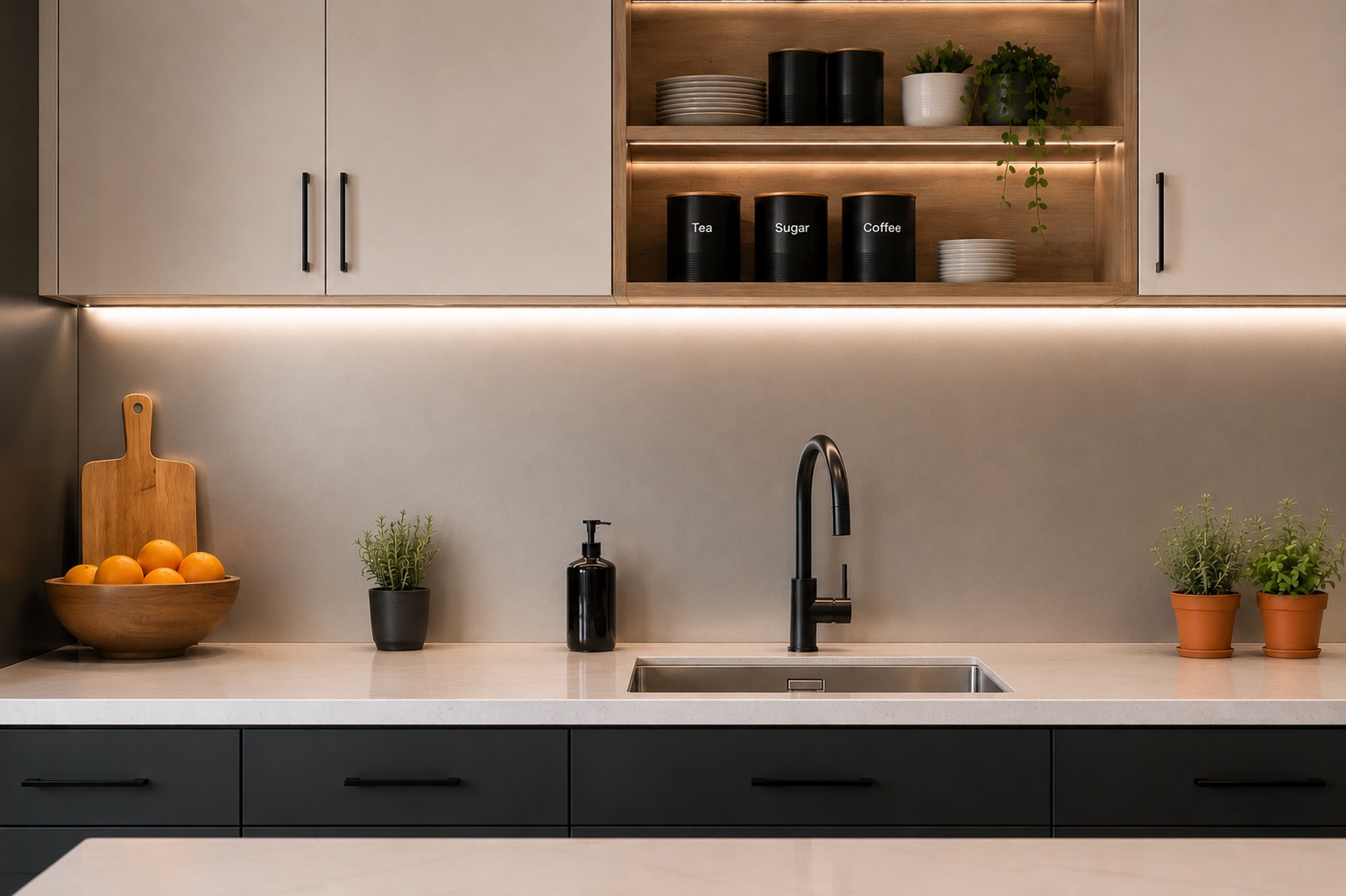
Aluminum backsplash panels combine the best cleaning properties: non-porous surface, smooth protective coating, and completely seamless installation. There are no grout lines, no seams between pieces, and no texture to trap residue.
Cleaning an aluminum panel:
- Dampen a soft cloth with warm water and a mild household cleaner
- Wipe the surface
- Done
That's it. Cooking grease, sauce splatters, coffee stains, and fingerprints all wipe away in a single pass. The protective color coating is specifically formulated to resist adhesion of common kitchen contaminants.
For tougher buildup (which is rare with regular wiping), Premium Backsplash offers a dedicated cleaning kit designed for their aluminum panels. But for daily maintenance, a damp cloth is all you need.
Peel-and-Stick
Cleaning difficulty: Low (initially)
Peel-and-stick vinyl panels are smooth and non-porous when new, making them easy to wipe clean. However, the material degrades over time — the surface becomes tacky, discolors from heat and UV, and the edges peel up, creating gaps where grime accumulates.
After 1–2 years, cleaning difficulty increases significantly as the material deteriorates.
The Grout Factor
Grout deserves special attention because it's the single biggest driver of backsplash cleaning difficulty. Consider these numbers:
- A typical tile backsplash has 200+ linear feet of grout lines
- Grout is porous and absorbs liquids within seconds of contact
- Sealed grout still needs resealing annually to maintain protection
- Discolored grout makes an entire backsplash look dirty, even when the tiles are clean
- Professional grout cleaning costs $5–$10 per square foot
Eliminating grout entirely — by choosing a seamless material — removes the most time-consuming element of backsplash maintenance.
Cleaning Frequency by Material
How often each material needs attention to maintain a clean appearance:
- Aluminum panels: Wipe weekly, or after messy cooking sessions. No deep cleaning needed.
- Glass: Wipe weekly. Degrease monthly behind the stove.
- Stainless steel: Wipe every 1–2 days to manage fingerprints and spots.
- Tile: Wipe tile weekly. Scrub grout monthly. Deep clean grout quarterly.
- Natural stone: Wipe immediately after any spill. Clean weekly. Reseal annually.
The Long-Term Cleaning Math
Over 10 years, assuming 15 minutes per cleaning session:
- Tile (weekly tile wipe + monthly grout scrub): ~175 hours
- Stainless steel (every other day): ~260 hours
- Glass (weekly + monthly degrease): ~100 hours
- Aluminum (weekly wipe): ~65 hours
- Natural stone (weekly + quarterly deep clean + annual seal): ~150 hours
The difference between the easiest and hardest materials is roughly 200 hours over a decade. That's more than eight full days of your life spent cleaning a backsplash.
Choose the Backsplash That Cleans Itself (Almost)
Premium Backsplash aluminum panels are seamless, non-porous, and wipe clean in seconds. No grout to scrub, no streaks to buff, no special cleaners required. See how effortless kitchen maintenance can be — request a free sample.