Kitchen backsplash tile gets hit with cooking grease, tomato sauce, coffee splashes, and steam every single day. Keeping it clean isn't just about appearance — grease buildup degrades grout, stains porous materials, and creates a surface that harbors bacteria. This guide covers how to clean backsplash tile by material type, how to tackle grout, and how to maintain your backsplash long-term.
Daily Cleaning: The Habit That Prevents Buildup
The single best thing you can do for your backsplash is wipe it down after cooking. Every time. It takes 30 seconds and prevents the grease accumulation that makes deep cleaning necessary.
Daily routine:
- Spray the backsplash with a mild all-purpose cleaner or a 50/50 vinegar-water solution
- Wipe with a soft cloth or microfiber towel
- Dry with a clean cloth to prevent water spots
That's it. Thirty seconds of daily maintenance prevents hours of deep cleaning later.
How to Clean Backsplash Tile by Material
Ceramic and Porcelain Tile
The most forgiving materials to clean. Both are non-porous (when glazed) and resist staining.
For routine cleaning: Warm water with a few drops of dish soap. Wipe with a soft cloth.
For grease buildup: Mix 1/4 cup baking soda with enough dish soap to make a paste. Apply to the greasy area, let sit 5 minutes, scrub with a soft brush, and rinse.
For stubborn stains: Use a commercial tile cleaner (like ZEP Grout Cleaner or Bar Keepers Friend). Apply, let sit per directions, scrub, and rinse.
Avoid: Abrasive scrubbers on glazed tile (they can dull the finish over time). Steel wool scratches both ceramic and porcelain permanently.
Glass Tile
Glass tile shows every water spot, fingerprint, and grease splatter. The good news: it's non-porous and cleans easily.
For routine cleaning: Glass cleaner (Windex or equivalent) and a lint-free cloth. Buff dry to prevent streaks.
For grease: Dish soap and warm water. Glass releases grease easily — it doesn't penetrate the surface.
Avoid: Abrasive cleaners, scouring pads, and anything that could scratch the glass surface. Even baking soda paste can leave micro-scratches on polished glass.
Natural Stone (Marble, Travertine, Slate)
Stone is the most demanding backsplash material to clean. It's porous, sensitive to acids, and stains easily.
For routine cleaning: pH-neutral stone cleaner only. Regular dish soap can etch marble and travertine over time.
For stains: Make a poultice from baking soda and water (for oil stains) or baking soda and hydrogen peroxide (for organic stains). Apply to the stain, cover with plastic wrap, and let sit 24 hours.
Avoid: Vinegar, lemon juice, or any acidic cleaner on marble or limestone — acid etches the surface permanently. No abrasive scrubbers. No generic all-purpose cleaners.
How to Clean Backsplash Grout
Grout is where backsplash cleaning gets difficult. Even sealed grout is semi-porous and absorbs grease, moisture, and staining compounds over time.
Light Grout Cleaning
- Spray with a 50/50 vinegar-water solution (not for stone tile)
- Let sit 5 minutes
- Scrub with a stiff brush or old toothbrush
- Rinse and dry
Medium Grout Cleaning
- Make a paste of baking soda and water
- Apply to grout lines with a brush
- Spray vinegar over the paste (it will fizz)
- Scrub after 5 minutes and rinse
Heavy Grout Cleaning (Stained or Discolored)
- Apply a commercial grout cleaner (ZEP, Rejuvenate, or OxiClean)
- Let sit 10–15 minutes
- Scrub with a stiff nylon brush
- Rinse thoroughly
- Consider steam cleaning for severe discoloration
Nuclear Option: Grout Recoloring
If cleaning doesn't restore the original grout color, grout pens or grout stain products let you paint a new color over the existing grout. It's a cosmetic fix, not a structural one, but it can dramatically refresh the appearance.
Preventing Grout Stains
- Seal grout after installation and reseal every 1–2 years
- Wipe grease splatters immediately — once grease absorbs into grout, it's far harder to remove
- Use a grout sealer pen for touch-ups between full resealing sessions
- Choose darker grout if possible — it hides staining better than white grout
How Often to Deep Clean
| Area | Frequency |
|---|---|
| Behind stovetop | Weekly |
| Behind sink | Bi-weekly |
| Side walls and low-splash areas | Monthly |
| Grout deep clean | Quarterly |
| Grout resealing | Every 1–2 years |
The Low-Maintenance Alternative
If the grout cleaning schedule above made you tired just reading it, you're not alone. The core cleaning problem with tile backsplash isn't the tile — it's the grout. Grout is porous, absorbent, and requires constant attention in a kitchen environment.
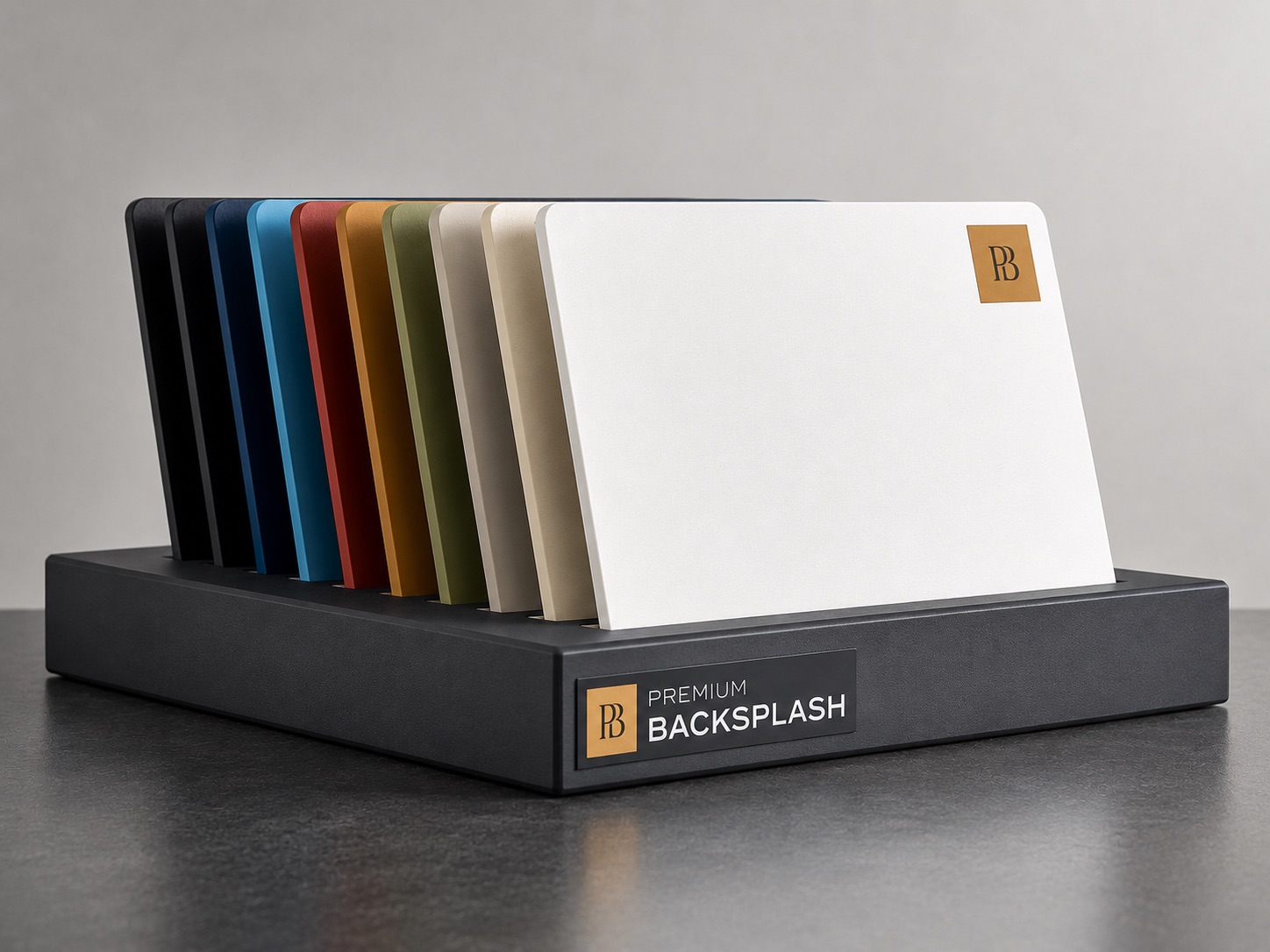
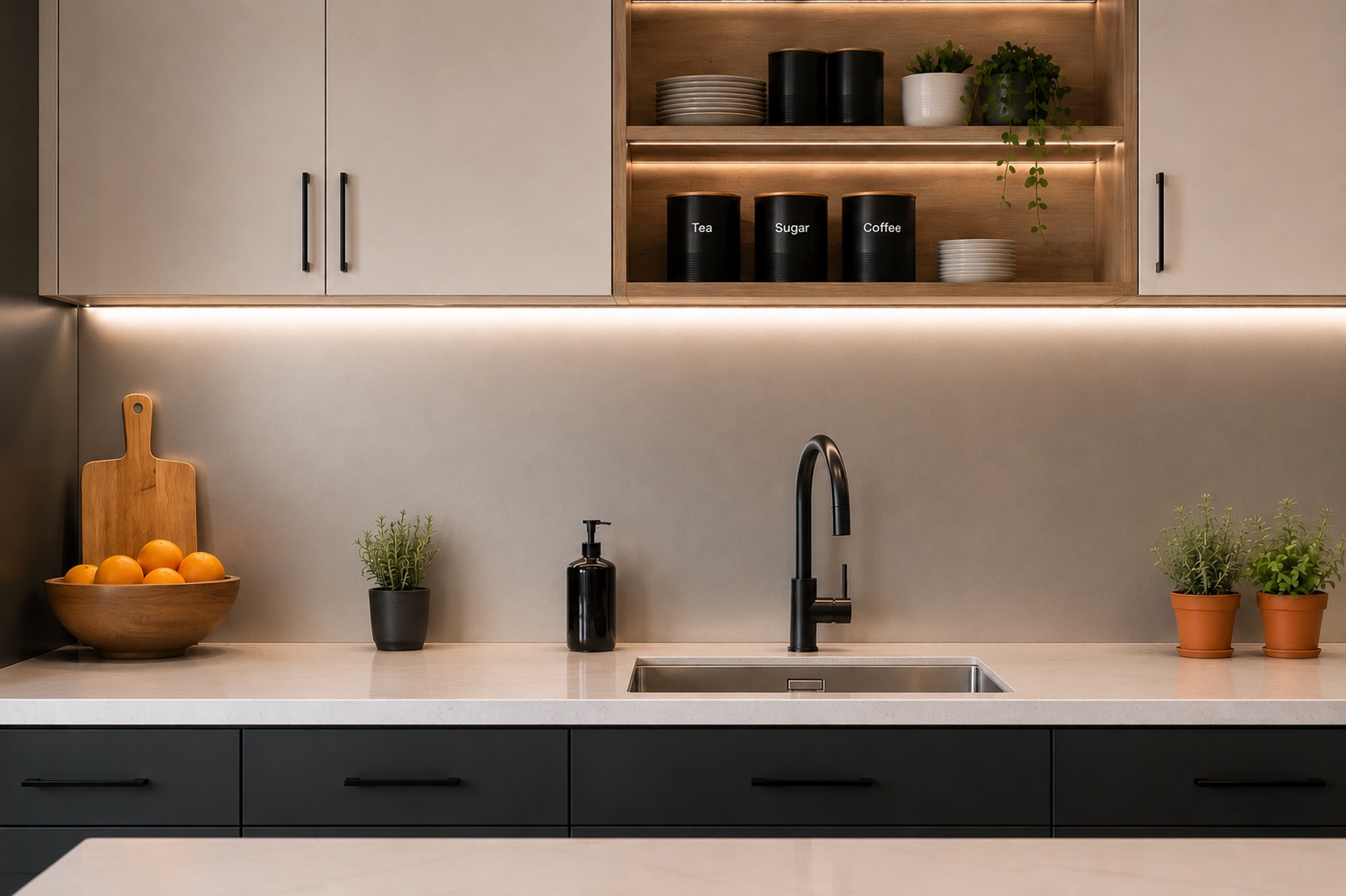
Premium Backsplash aluminum panels eliminate grout entirely. The seamless, non-porous surface cleans with a single wipe — no grout scrubbing, no sealing schedule, no specialty stone cleaners. A damp cloth with mild soap removes cooking grease in seconds. Premium Backsplash also offers a dedicated cleaning kit designed specifically for their aluminum panels, making maintenance as simple as it gets. If you value a clean kitchen but not the effort it takes to maintain tile grout, a seamless panel is worth serious consideration.