The wall behind your stove takes more abuse than any other surface in your kitchen. Grease splatter, steam, direct radiant heat from burners, and occasional flame contact from gas ranges all hit this area daily. Not every backsplash material can handle it — and choosing the wrong one can mean discoloration, warping, or worse.
Here's what you need to know about heat resistance when choosing a backsplash for behind your range.
How Hot Does It Actually Get?
Understanding the temperatures involved helps frame the material comparison:
- Wall surface behind an electric range: 150–200°F during normal cooking
- Wall surface behind a gas range: 200–300°F, with potential spikes higher near burner grates
- Steam from boiling water: 212°F
- Radiant heat zone (within 6 inches of burners): Can exceed 300°F during extended high-heat cooking
Building codes generally require that backsplash materials behind a range withstand at least 200°F without degrading. But real-world kitchen use — especially with gas ranges and high-BTU burners — can push beyond that threshold.
Material Comparison: Heat Resistance Behind the Stove
Ceramic and Porcelain Tile
Heat tolerance: Excellent (1,000°F+)
Tile is fired at extreme temperatures during manufacturing, so it handles kitchen heat without any issues. The tile itself won't discolor, warp, or degrade.
However, the grout between tiles is the weak link. High heat can dry out and crack grout over time, especially directly behind gas burners. Grease that penetrates cracked grout near heat sources is nearly impossible to clean and creates a persistent odor.
Verdict: The tile is fine. The grout isn't.
Stainless Steel
Heat tolerance: Excellent (1,500°F+)
Stainless steel handles heat effortlessly — it's the standard material in commercial kitchens for good reason. No discoloration, no warping, no degradation from cooking temperatures.
The downside is entirely aesthetic and maintenance-related. Stainless steel behind a stove shows every grease splatter, every water droplet, and every fingerprint. The area behind a range is the highest-splatter zone in the kitchen, which means constant cleaning to maintain appearance.
Verdict: Handles heat perfectly but demands constant cleaning.
Tempered Glass
Heat tolerance: Good (400–500°F)
Back-painted tempered glass handles normal cooking heat without issues. Tempering makes the glass resistant to thermal shock — the rapid temperature changes that occur when a cold splash hits a hot surface.
Standard (non-tempered) glass should never be used behind a stove. It can crack from thermal stress. Always verify that glass backsplash panels are fully tempered.
Verdict: Safe when tempered. Not suitable as standard glass.
Aluminum Panels
Heat tolerance: Good (up to 300°F for coated panels)
Aluminum backsplash panels with protective color coatings are rated for temperatures up to 300°F (150°C). This covers the vast majority of residential cooking scenarios, including use behind gas and electric ranges.
The protective coating is the critical component. Quality aluminum panels use industrial coatings that resist heat, UV exposure, and chemical contact without discoloring or degrading. The aluminum substrate itself has a much higher melting point (1,220°F), so structural integrity is never a concern.
What sets aluminum apart behind the stove is the cleaning factor. The seamless, non-porous surface means grease splatter wipes off completely — no grout lines to trap residue, no texture to hold onto grease molecules. Behind a range, where cleaning frequency is highest, this matters enormously.
Verdict: Handles normal cooking heat with the easiest cleanup of any material.
Natural Stone (Marble, Granite, Soapstone)
Heat tolerance: Good to Excellent (varies by stone)
Granite and soapstone handle heat well. Marble is more sensitive — direct heat can cause discoloration and damage to the polished surface. All natural stone is porous and requires sealing, especially in the high-splatter zone behind a stove.
Grease absorption is the main concern. Even sealed stone can absorb oils over time, creating darkened areas that are difficult or impossible to reverse.
Verdict: Granite and soapstone work well. Marble is risky behind ranges.
Peel-and-Stick
Heat tolerance: Poor (150°F or less)
Most peel-and-stick backsplash products are made from vinyl or thin composite materials. They are not heat-resistant. The adhesive softens and fails at cooking temperatures, and the vinyl itself can warp, discolor, or release fumes when exposed to heat.
Peel-and-stick panels should never be installed directly behind a stove. Some manufacturers include small-print warnings about this, but many homeowners miss it during installation.
Verdict: Not safe behind a range. Period.
Beyond Heat: What Else Matters Behind the Stove
Heat resistance is the baseline requirement, but the area behind your stove has other demands:
Grease Resistance
This is the highest-splatter zone in your kitchen. Whatever material you choose needs to release grease easily. Non-porous, smooth surfaces (aluminum, glass, stainless steel) outperform porous or textured materials (tile with grout, natural stone).
Cleanability
You'll clean the area behind your stove more often than any other backsplash section. Materials with grout lines, textures, or porous surfaces accumulate grease that requires scrubbing. Seamless materials wipe clean with a damp cloth.
Discoloration Resistance
Steam and heat cycles can yellow or discolor some materials over time. Quality coatings on aluminum panels are specifically formulated to resist this. Cheap paint or vinyl will show degradation within months.
Flame Contact (Gas Ranges)
If you have a gas range, occasional flame contact with the backsplash is possible during high-heat cooking with large pans. Aluminum, tile, stainless steel, and tempered glass all handle brief flame contact safely. Vinyl and peel-and-stick materials do not.
The Best Choice for Behind Your Stove
For most residential kitchens, the ideal material behind the stove balances three factors: sufficient heat resistance, easy grease cleanup, and long-term appearance.
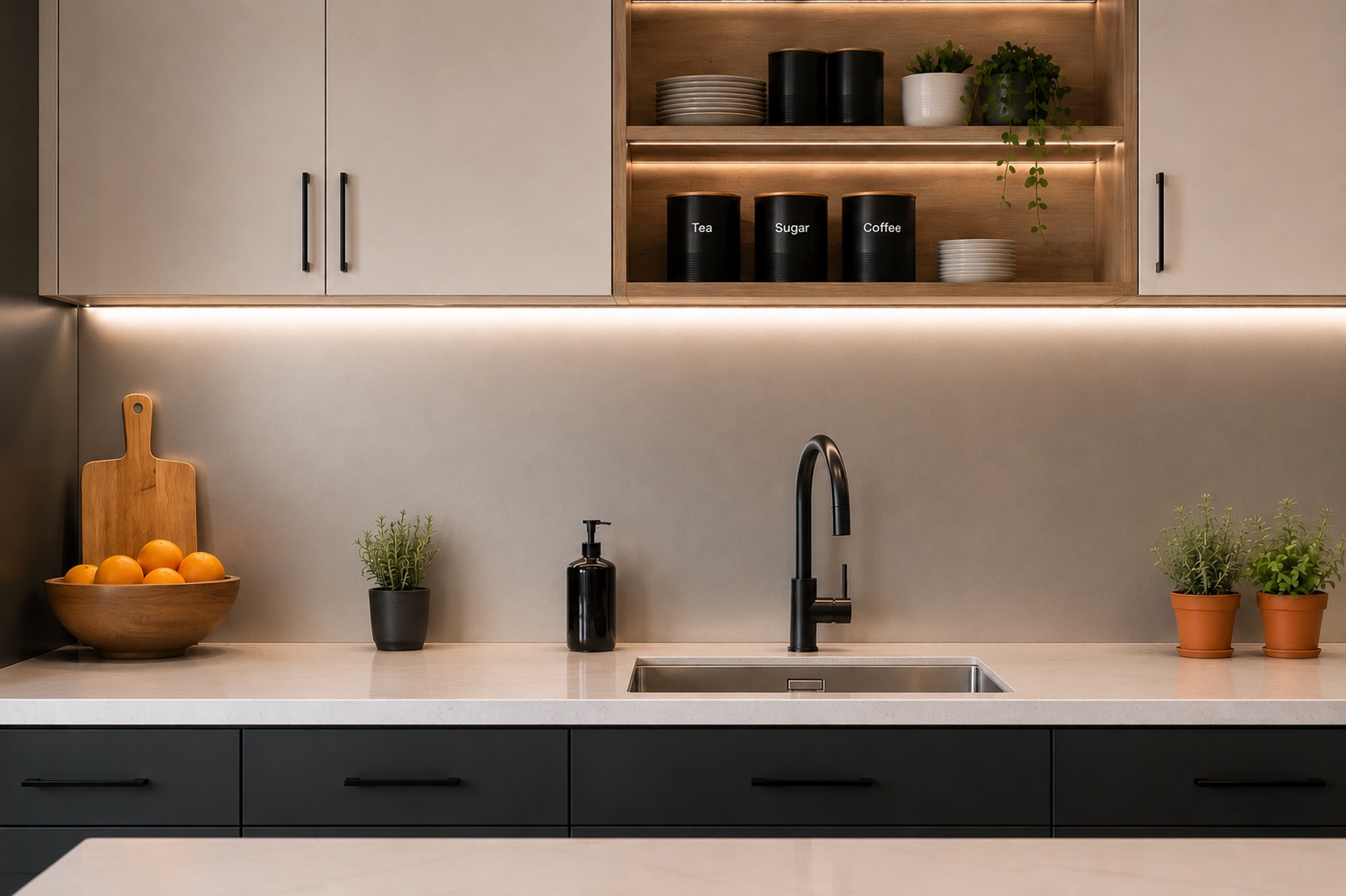
Aluminum panels hit this balance well. They handle the 200–300°F temperatures typical behind residential ranges, they offer the easiest grease cleanup of any material thanks to their seamless non-porous surface, and their industrial coating resists discoloration from heat cycling and steam exposure.
Stainless steel matches the heat performance but demands significantly more cleaning effort. Tile handles the heat but introduces grout maintenance. Glass works but is more fragile and shows smudges.
Protect the Hardest-Working Wall in Your Kitchen
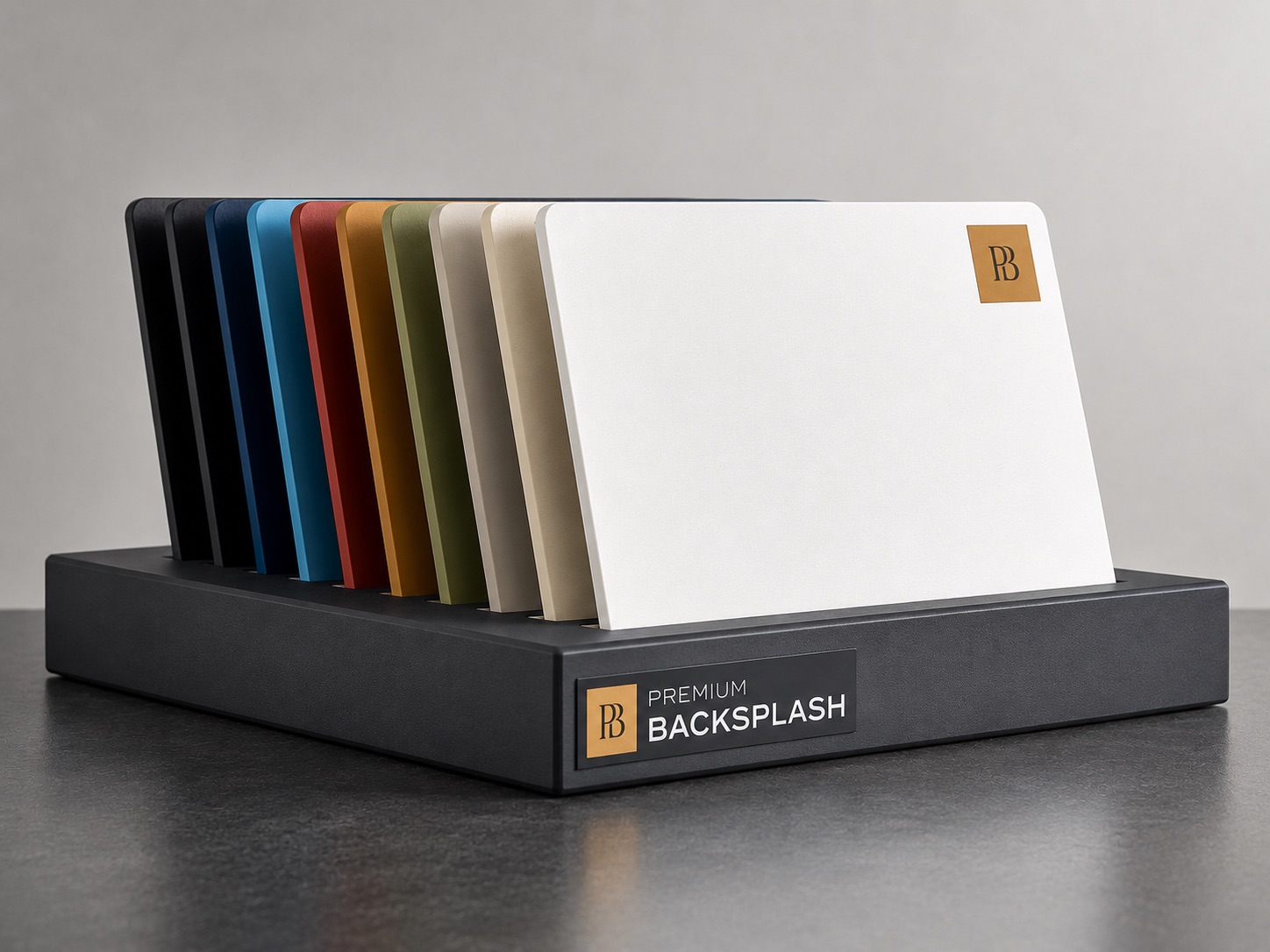
Premium Backsplash aluminum panels are rated for temperatures up to 300°F and feature a seamless surface that makes grease cleanup effortless. Custom-cut to fit around your range, outlets, and cabinetry with laser precision. See how they'd look in your kitchen — request a free sample.